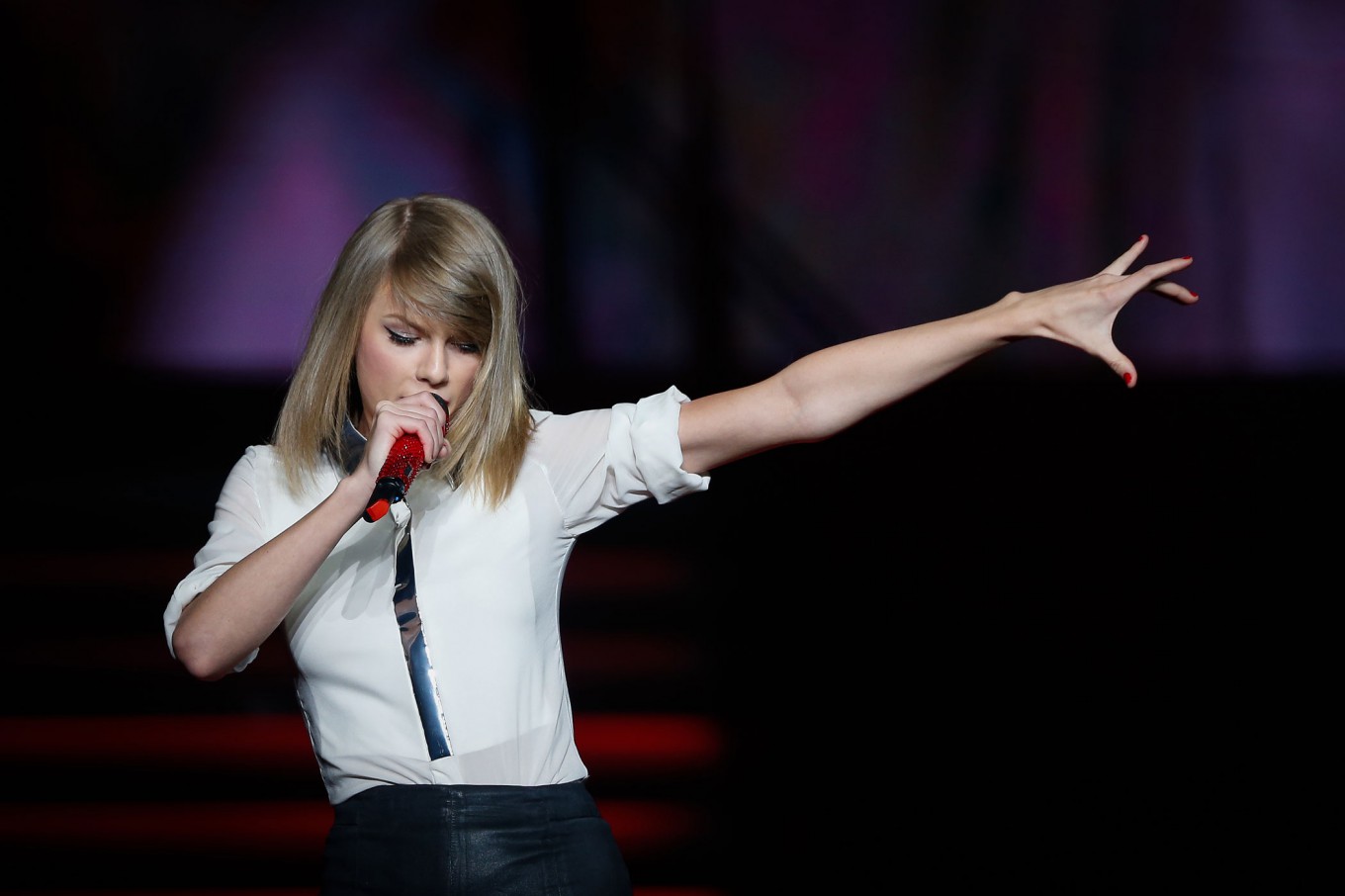
Taylor Swift and the implications of streaming music
Taylor Swift being interviewed for a piece on Yahoo Music:
If I had streamed the new album, it’s impossible to try to speculate what would have happened. But all I can say is that music is changing so quickly, and the landscape of the music industry itself is changing so quickly, that everything new, like Spotify, all feels to me a bit like a grand experiment. And I’m not willing to contribute my life’s work to an experiment that I don’t feel fairly compensates the writers, producers, artists, and creators of this music. And I just don’t agree with perpetuating the perception that music has no value and should be free. I wrote an op-ed piece in the Wall Street Journal this summer that basically portrayed my views on this. I try to stay really open-minded about things, because I do think it’s important to be a part of progress. But I think it’s really still up for debate whether this is actual progress, or whether this is taking the word “music” out of the music industry. Also, a lot of people were suggesting to me that I try putting new music on Spotify with “Shake It Off,” and so I was open-minded about it. I thought, “I will try this; I’ll see how it feels.” It didn’t feel right to me. I felt like I was saying to my fans, “If you create music someday, if you create a painting someday, someone can just walk into a museum, take it off the wall, rip off a corner off it, and it’s theirs now and they don’t have to pay for it.” I didn’t like the perception that it was putting forth. And so I decided to change the way I was doing things.
There are a lot of pieces to this puzzle… I’ll start with the consumer perspective:
Spotify, amongst its streaming brethren, is nearly the holy grail for the consumer. Nearly (i.e. nearly the holy grail) any song, any time, for just $10 per month ($5 per month if you’re a student!). It sounds too good to be true, and I’ll explore a bit later on if that indeed is the case. I’ve tackled the subject of streaming music before, and the issue comes down to value. If the average consumer streams let’s say 5 hours of music per week on Spotify, or 20 hours per month, and the average song length is 4 minutes, we’re looking at a total of 300 songs for a total of $10, or $0.0333 per song (and I believe I have taken very conservative numbers here). Spotify’s model boils the value of each song at pennies each, which then are split amongst Spotify’s overhead, record labels, publishers, songwriters, producers, and artists. The price of what you pay is significantly off from the price of what you get, and the ones creating the music are on the shit end of the stick. But is this Spotify’s fault?
From Spotify’s perspective:
After seeing the music industry shift from hard copy sales to digital copy sales, along with technology evolving to a world where everyone has broadband speeds in their pocket, why not have a “Netflix for music”? The only main dependency piece is the actual content. After years of being available elsewhere in the world, Spotify was able to ink contracts with the US major record labels and bring their service to the states. Spotify’s price point is a huge, if not the main appeal to customers and without conceding a price hike and sharing more revenue with the major record labels, the lowest possible price is negotiated at both ends, for the consumer, and the amount of revenue split with the labels. It’s a price point that has demonstrated itself to be effective in terms of consumer base and sustainability. Or is it?
From the music creator’s perspective:
Whether you fill any of the roles I mentioned previously, there is very little money to begin with when using Spotify’s model, and after it gets through everyone’s share there’s even less. Data has been showing that digital downloads of songs has been steadily declining, so how else can you have your music be heard if Spotify is where are the listeners are? If you’re Taylor Swift, you can afford the risk of pulling your album from Spotify, and in her case it paid off and then some. Her album 1989 is the first and, at the time of this writing, the only album released in 2014 to go platinum, selling more than 1 million copies in the first week alone.
But this has some pretty huge implications:
Are other artists going to follow suit? Perhaps not smaller artists because those that are still attempting to grow their fan base would simply do the opposite by pulling their music from Spotify, but because of the clout that Taylor Swift has and the success that was demonstrated by her album sales, it could lead to many major artists abandoning Spotify, if only for the initial launch period of their latest releases in order to drive sales. But let’s say that for argument’s sake that major artists decide to pull their catalogs from Spotify permanently and not just for their launch period… Spotify will be screwed. When it comes down to it, the content is king, and in this case the content is music. Without music to stream, Spotify is a piece of streaming technology, cold and empty fulfilling no purpose. The sad thing about this whole thing is the fact that the piece filling that cold void is not being treated as such.
